The board game is enjoying an unexpected revival. No longer confined to evenings with friends, it has become a strategic tool inside companies. Faced with the limits of traditional training and a hunger for fresh team building ideas, organisations are rediscovering the power of play. The corporate board game is now a genuinely innovative way to train, unite and raise awareness across teams. Here’s how Arcane Experience uses it to help companies grow.
Why choose a board game for your company?
Board games are versatile, effective tools for tackling professional challenges. Unlike conventional training courses or traditional team building activities, their playful side drives active engagement. Freed from rigid formats, participants are more motivated and more receptive. This interactive setting fuelsexperiential learning : employees test strategies, take decisions and see the consequences in real time, with no risk to the business.
Board games also spark conversation naturally. By encouraging cooperation or negotiation, they strengthen bonds between colleagues and improve communication. They’re flexible too, adapting to a wide range of objectives: technical training, soft skills development, or workplace awareness-raising around CSR issues.
Take one example: Naval Group chose a bespoke War Game for a strategic convention. Designed by Arcane Experience, this immersive game invited 50 participants (sailors and procurement leads) to simulate complex naval scenarios, while breaking the ice and fuelling co-creation. The result: a sharper grasp of business challenges and a stronger sense of collaboration.
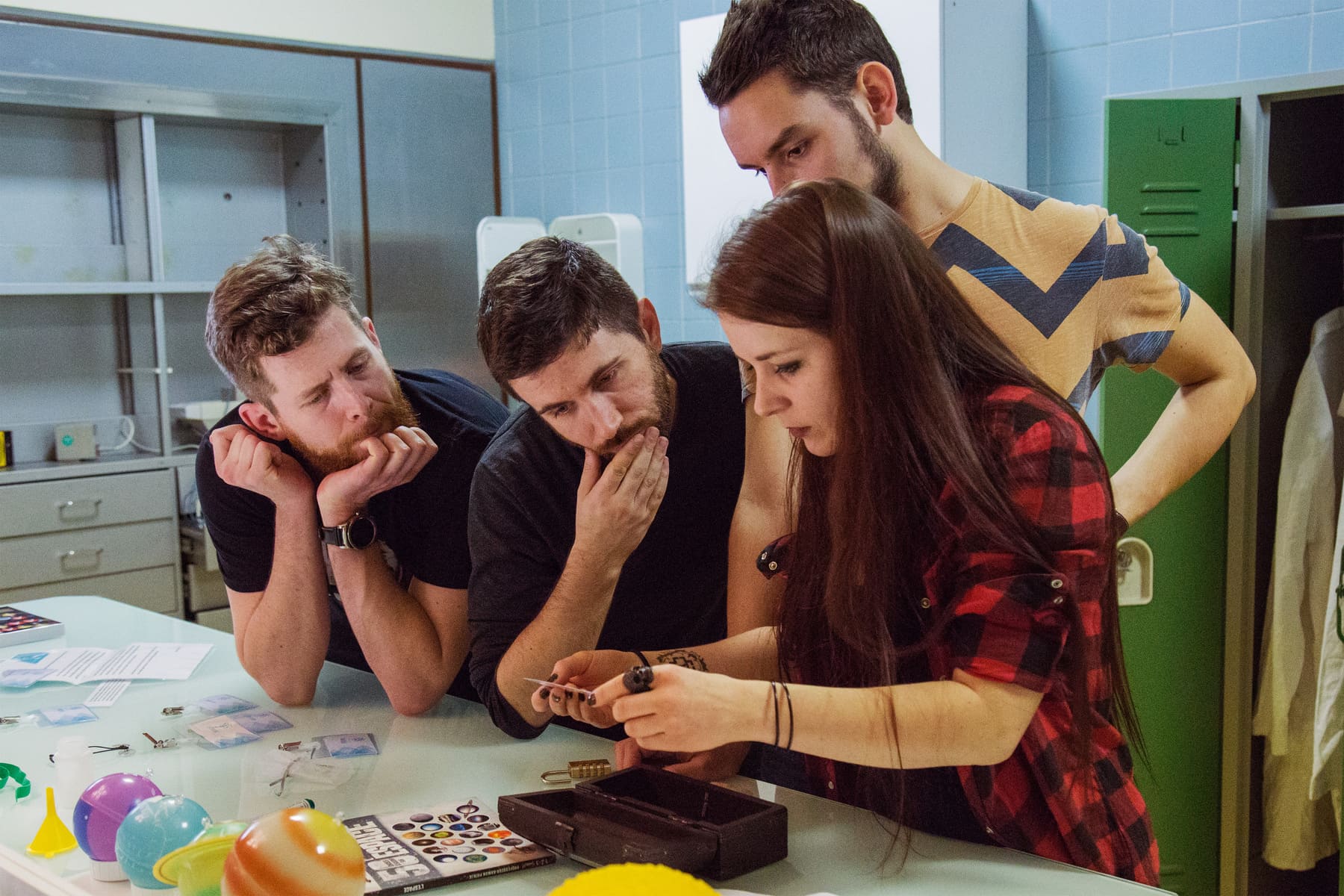
Board games and training: learning through play
Board games turn training into a memorable experience. By combining game mechanics with learning content, they make it easier to build key skills, whether hard skills (project management, cybersecurity) or soft skills (leadership, conflict resolution). A collaborative game on time management, for instance, teaches teams to prioritise under pressure, while a negotiation game sharpens their powers of persuasion.
At Arcane Experience, we design bespoke serious games to meet these needs. Our immersive approach lets participants practise in a safe space, where mistakes become learning opportunities. Take leadership training: a strategic role-play with challenges and instant feedbackwill land far better than a theory-heavy presentation.
These tools work just as well on technical subjects. A game like Follow the Brain, game-based training on cognitive bias, raises awareness of disability while developing critical thinking. Workplace gamification makes training accessible, engaging and far easier for learners to remember.
Board games and team building: bringing teams closer
Board games reinvent creative team building by turning working relationships into memorable, unifying experiences. Unlike traditional activities (escape rooms, sporting offsites), they put everyone on an equal footing, with each person contributing their own strengths. Working together to crack puzzles, manage resources or reach a shared goal, teams build trust, active listening and collective spirit.
Their key advantage: they simulate real dynamics without the hierarchy getting in the way. The board game created for Konecta , for example, brought 100 managers together to draft an intergenerational code of conduct. By deliberately exaggerating poor management habits, it opened up a collective conversation about the good practices to put in place across the company. At Arcane Experience, we also create board games Ice Breaker, where teams tackle challenges built around cooperative engagement, for instant cohesion and easy communication.
These formats loosen things up and reveal hidden talents: the quiet one becomes a strategist, a manager learns to delegate. By blending enjoyment with professional stakes, board games create shared memories that embed collaborative skills for the long term.
Board games and awareness-raising: an interactive way into key topics
Raising awareness of complex themes such as diversity, workplace wellbeing or cybersecurity calls for subtlety and engagement. Board games achieve both by immersing participants in a story, with no lecturing. Playing roles or facing ethical dilemmas, employees experience the consequences of their choices, which sparks empathy and genuine awareness.
Take Follow The Brain, our large-scale murder mystery on cognitive bias and disability. As they solve a fictional theft, players discover how their own prejudices shape their decisions. Scalable to up to 1,000 participants, the game makes abstract concepts tangible through playful mechanics: clues to decode, testimonies to analyse, and the cooperation needed to unmask the culprit.
Unlike conferences or e-learning modules, board games win people over through action. They turn sensitive subjects into collective challenges, where mistakes are allowed and discussion is encouraged. The messages hit home, rooted in lived experience, and teams are far better equipped to apply what they’ve learned day to day.
How to choose the right board game for your company
Choosing a board game that matches your professional objectives takes careful, methodical thought. This step is crucial to the success of your project and to maximising your return on investment. Here are the essentials to weigh up.
Define your objectives and constraints
First, get clear on what you want: to train your teams in new skills, strengthen team cohesion, or raise awareness of specific issues? Group size, time available and budget are equally decisive. A game that works beautifully with a team of 10 may fall flat with a group of 50.
Bespoke game or off-the-shelf solution?
The choice between a customised game and an off-the-shelf solution deserves real thought. Existing games are immediately available and often cheaper. A bespoke game, however, like those developed by Arcane Experience, weaves in your company culture, your specific challenges and your professional vocabulary. That level of customisation boosts participant engagement and the impact of the whole experience.
Why facilitation and support matter
Choosing the game is only half the equation. Facilitation is a key success factor that’s often underestimated. An experienced facilitator knows how to adjust the pace, sustain engagement and, above all, draw out the key learnings. They also bridge the game experience and your professional objectives. Support can include a preparation phase, the facilitation itself, and a structured debrief to embed the learning.
