EDF UNIE
How do you steer change management and rally 220 employees around a transformation plan?
When a major organisation like EDF’s UNIE (the unit responsible for maintaining nuclear power plants) launches a five-year strategic plan, the real challenge lies in change management and buy-in on the ground. Working alongside the agency Elephant Live, Arcane Experience created “Mission ISI”, a bespoke change management serious game . The programme turned a highly technical transformation project into a pragmatic collective adventure, able to drive change at scale while putting people first.
The sticking points: overcoming resistance to change and breaking down silos
Rolling out an organisational transformation plan often runs into strong resistance to change that traditional communication methods simply can’t shift. At EDF, two major organisational barriers had to be removed:

Siloed departments
One of the key aims of this organisational transformation was to build a stronger collective and become an “integrating engineering unit”. The classic risk in any change process is that employees retreat into their usual silos out of operational habit.

Fear of blurred reporting lines
The shift to a project-based organisation raised legitimate concerns: “Who decides now? The technical expert, the manager or the project lead?” This reluctance, tied to the manager’s role and the new governance model, risked blocking the adoption of new ways of working.
Our answer: driving change through collective intelligence
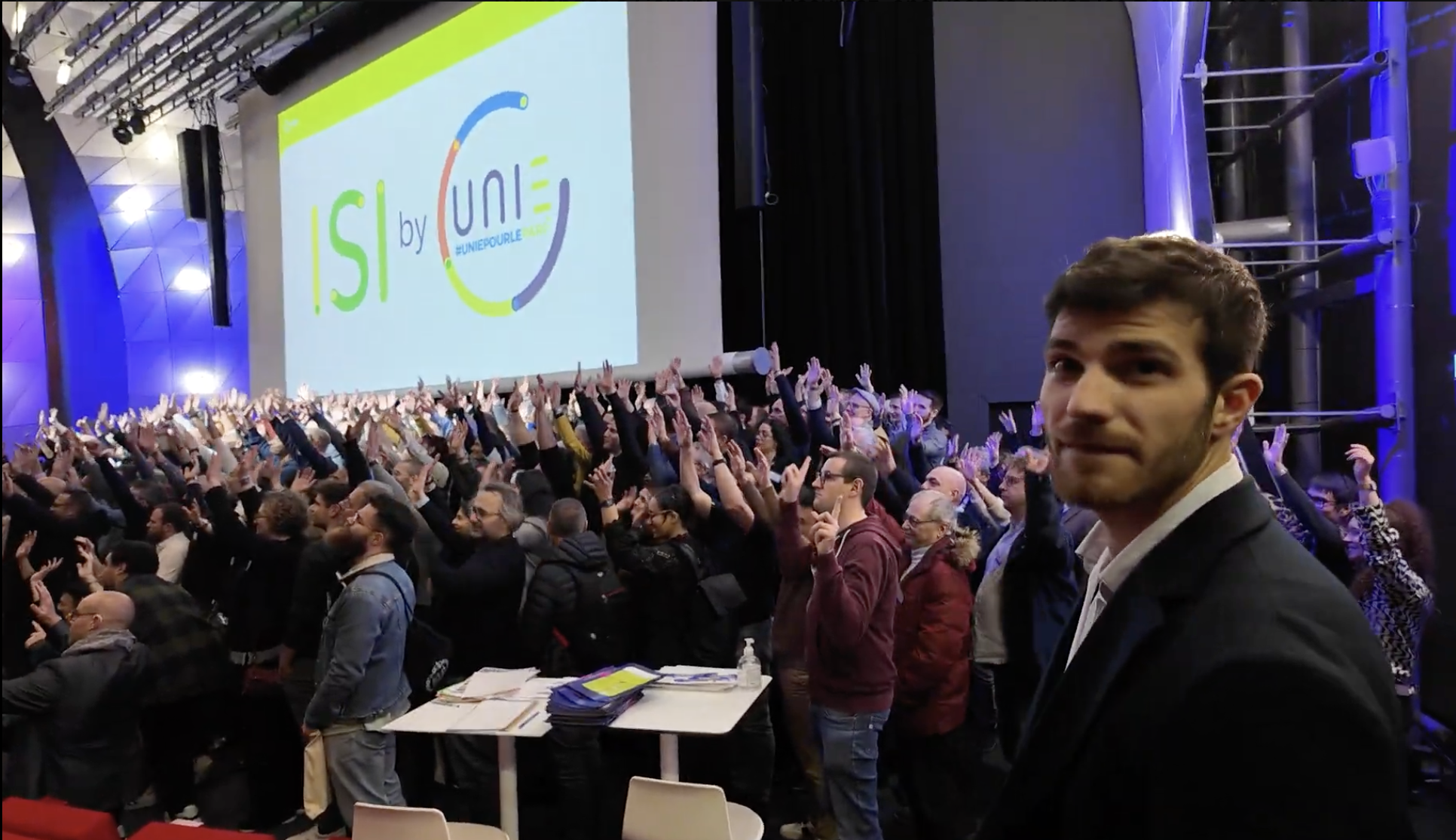
To support the change and overcome resistance, Arcane translated EDF’s 2029 roadmap into a powerful storyline: the space race. Over two hours, the 220 participants, split into teams, had to clear the milestones of the company’s transformation through 8 puzzles built oncollective intelligence.

Cross-team work built into the gameplay
To counter resistance and break down silos, the game physically forces participants to cooperate. InPuzzle 3 (Decryption), players discover their notebook holds only half a decoding key; they have no choice but to team up with another group to move forward. Later,Puzzle 4 (Group photo) requires several teams to merge and physically recreate the UNIE logo, bringing a participative change culture to life.

Visual clarity to reassure the teams
To defuse concerns and support managers and employees as they take on new roles,Puzzle 4 (Pitch) puts UNIE speakers centre stage. In a lively sketch, they embody the new management model through simple colour coding (orange scarf for the technical lead, green for the RTP, blue for the Workstream Lead, yellow for the PMO). An instant quiz then confirms and embeds the exact rules of this new way of working, helping to make change easier internally.
The impact: winning over the key players in the transformation
With 10 professional actors on stage, this offsite activated the right levers of change and made complex concepts tangible. Participants left as genuine ambassadors for the mission, ready to deliver the strategy around three pillars: Engineering, Simplification, Integration. It’s the same learning-through-play approach we apply when we design an innovation serious game to guide R&D teams through their digital transformation projects.
FAQ: steering and supporting change successfully
What makes change stick in a company?
To make change work, you need to involve employees directly rather than impose a top-down reorganisation. A change management serious game uses play to create positive momentum. By simulating real situations in a fictional setting, teams can explore change without pressure, which encourages acceptance and lasting buy-in to the new direction. If your transformation specifically concerns your managers, take a look at our cross-generational management serious game to align your management teams.
How does a game help handle resistance to change?
A game makes it possible to surface and handle resistance constructively. Rather than ignoring organisational blockers, the game brings them into the open so they can be defused. For instance, the arrival of new tools or a change of methodology is woven into the gameplay as a collaborative challenge. Employees discover the benefits of the new process for themselves, which naturally removes resistance . For projects focused on societal transformation, we also offer a sustainability team building.
What is the manager's role in the change process?
Managers are key to championing change within their team, day after day. Our facilitation and organisational coaching approach gives them the tools to support their teams effectively. Planning a change project or an organisational transformation? You can contact us directly to design a bespoke change management strategy.
