Crisis management serious game for Les Mousquetaires
Les Mousquetaires
When the unexpected strikes, technical procedures aren’t enough: an organisation’s resilience rests first and foremost on its collective skills. At the initiative of the Chief Information Security Officer (CISO) of Groupement Les Mousquetaires, Arcane Experience designed a large-scale serious game on crisis management . This immersive programme combines gaming and learning objectives, and was built by our designers to shake up the company’s usual frames of reference and embed new operational coordination reflexes.

The challenge: preparing managers to decide under uncertainty
The leadership team at Les Mousquetaires wanted an innovative adult learning tool to raise awareness of crisis management fundamentals among its managers. In an emergency, employees tend to fall back on their usual professional expertise. The aim of this crisis management training was therefore to create a destabilising environment — a controlled loss of bearings — to highlight the importance of the human factor and of sensitive communication in a crisis (handling a social media backlash, social media rumours, and so on).
Our answer: a crisis simulator and a bespoke software platform
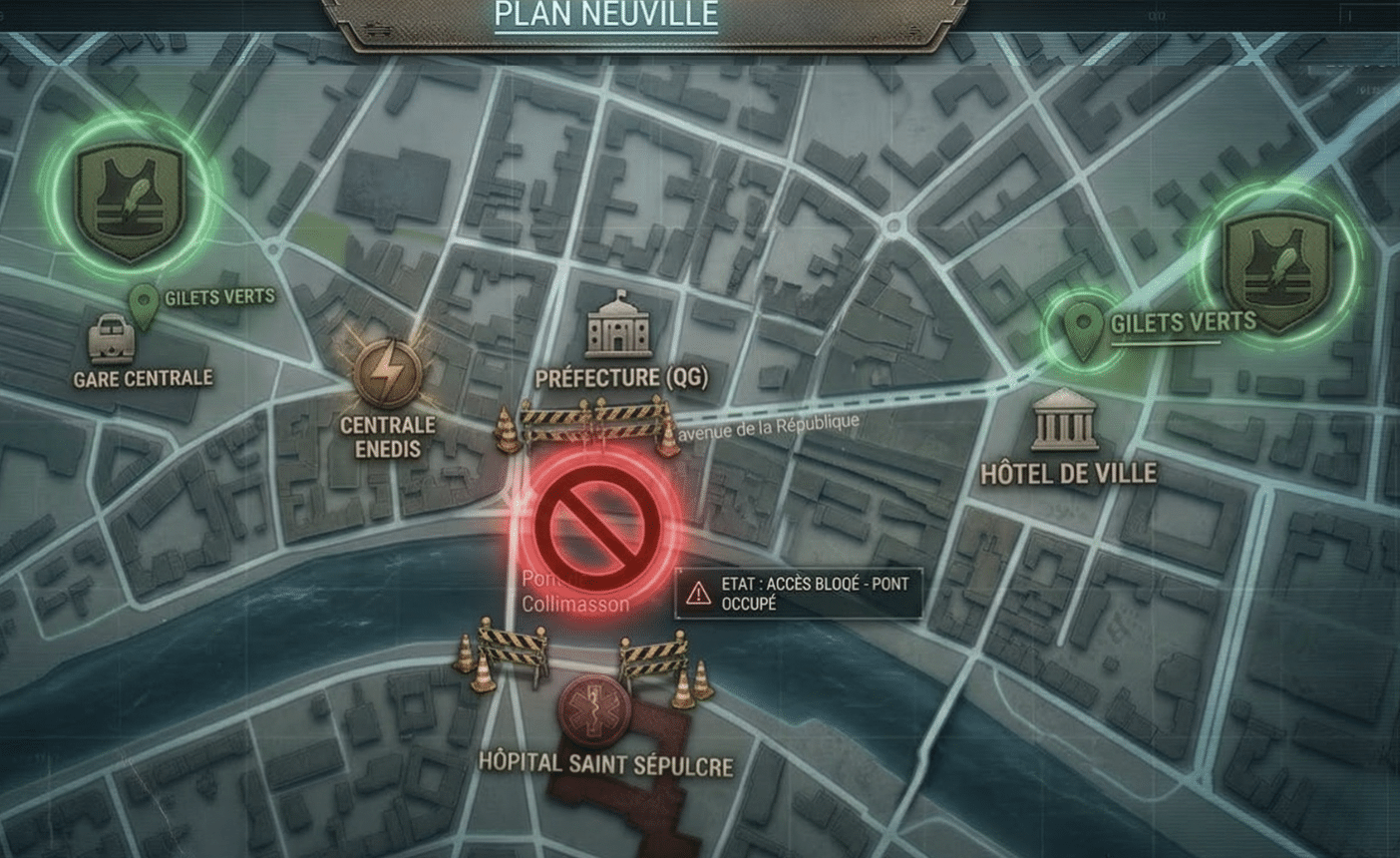
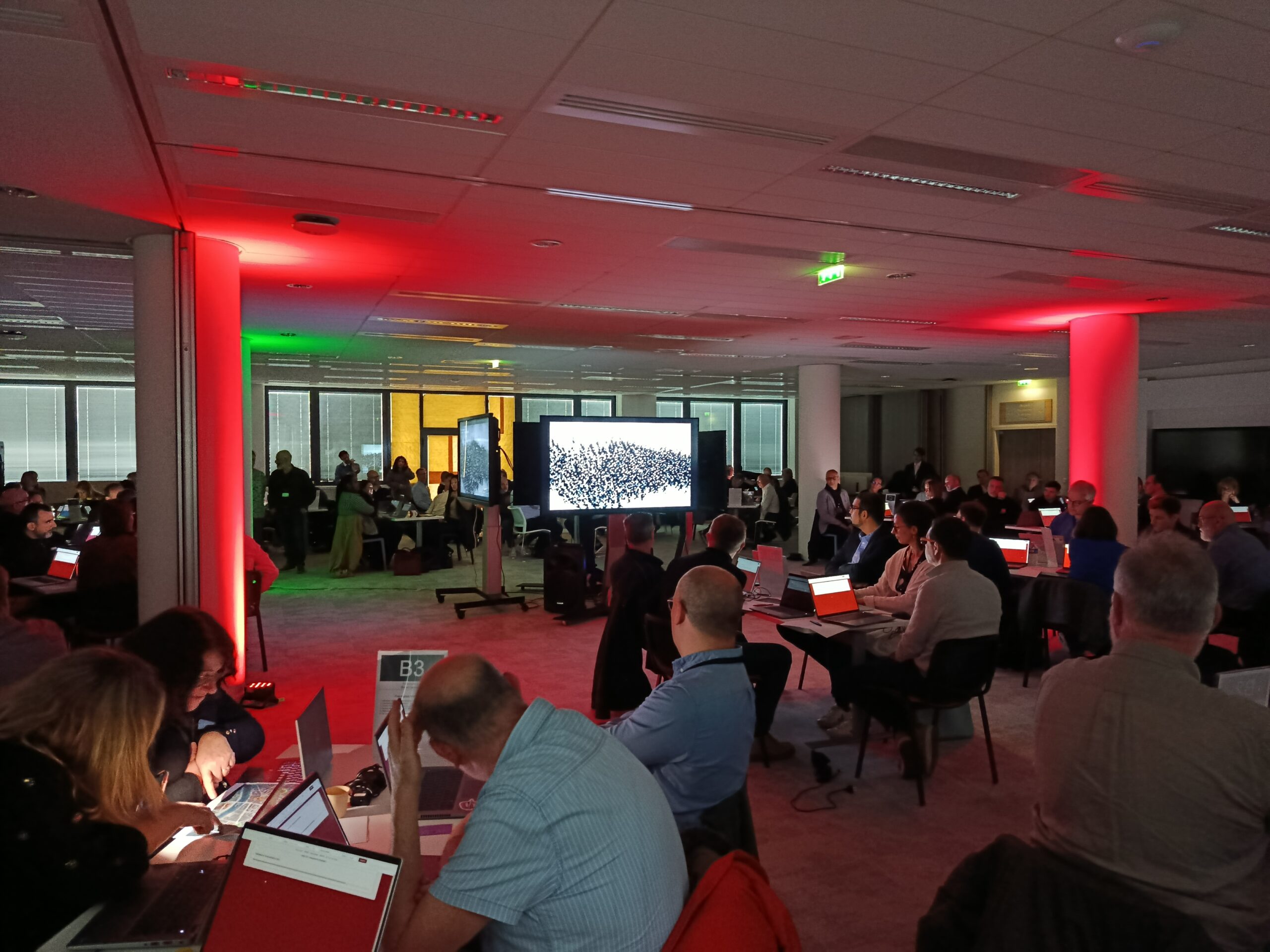
To switch off everyday reflexes, we built a virtual scenario entirely outside the business context: managing a major regional social crisis known as “Les Gilets Verts”. Over 2 hours of play, 130 managers were split into autonomous crisis units.
The cornerstone of this setup was the development of a simulator built as a bespoke software platform, co-designed with the client. This proprietary tool orchestrated the crisis in real time, releasing events asynchronously and tailoring the gameplay to each individual within the same team. The project took 4 months of production to deliver an ultra-realistic crisis management experience.
Game mechanics: mastering time and the flow of information
The simulation was structured in two distinct phases to maximise game-based learning and the retention of crisis processes:

A relentless pace
In the second part of the scenario, the software platform injected a new stimulus every 1 minute, sometimes every 30 seconds.

Outside pressure
To heighten realism in the crisis room, fake journalists burst in demanding a press briefing, testing the learners’ responsiveness and communication strategy.

Filtering the signal
Each crisis team had to sort vital data from a constant stream of “noise”: social media monitoring, logistical trade-offs in the face of incidents, and video calls for regular situation updates.
Learning through failure
Overwhelmed by the tempo of phase 1, the teams initially failed. That pause gave them the chance to get organised and tackle phase 2 with method, structure and cooperation.
Impact and benefits: building a genuine culture of anticipation
This crisis management serious game left a lasting impression. By combining play and professional substance, the experience triggered immediate awareness of the limits of an unprepared team.
An overall communication plan
Participants understood that facing a crisis over time demands rigorously structured messaging, clear to every stakeholder, internal and external.
Business continuity
The debrief led by the trainer confirmed the need for a clear business continuity plan (BCP) and a defined allocation of roles to steer a crisis effectively.
FAQ: why choose a serious game to steer a crisis?
What's the advantage of a playful format for a crisis management serious game?
Game-based learning neutralises hierarchy. In this corporate game, the managers at Les Mousquetaires had to rely purely on their soft skills: listening, handling complex situations and team cohesion to respond to the crisis.
How do your consultants measure the effectiveness of this game-based training?
Success is measured by the learners’ ability to move from chaos to organisation. Our game-based approach deliberately overwhelms them at first (one stimulus every 1 minute to 30 seconds) to force immediate reflection. That contrast is what makes the learning stick.
How does the game help in handling an emergency?
Serious games simulate time pressure and the lack of reliable information. By forcing the crisis unit into rapid trade-offs (resource management, responding to alerts), they teach leaders to stay operational under stress and to anticipate major crises.
